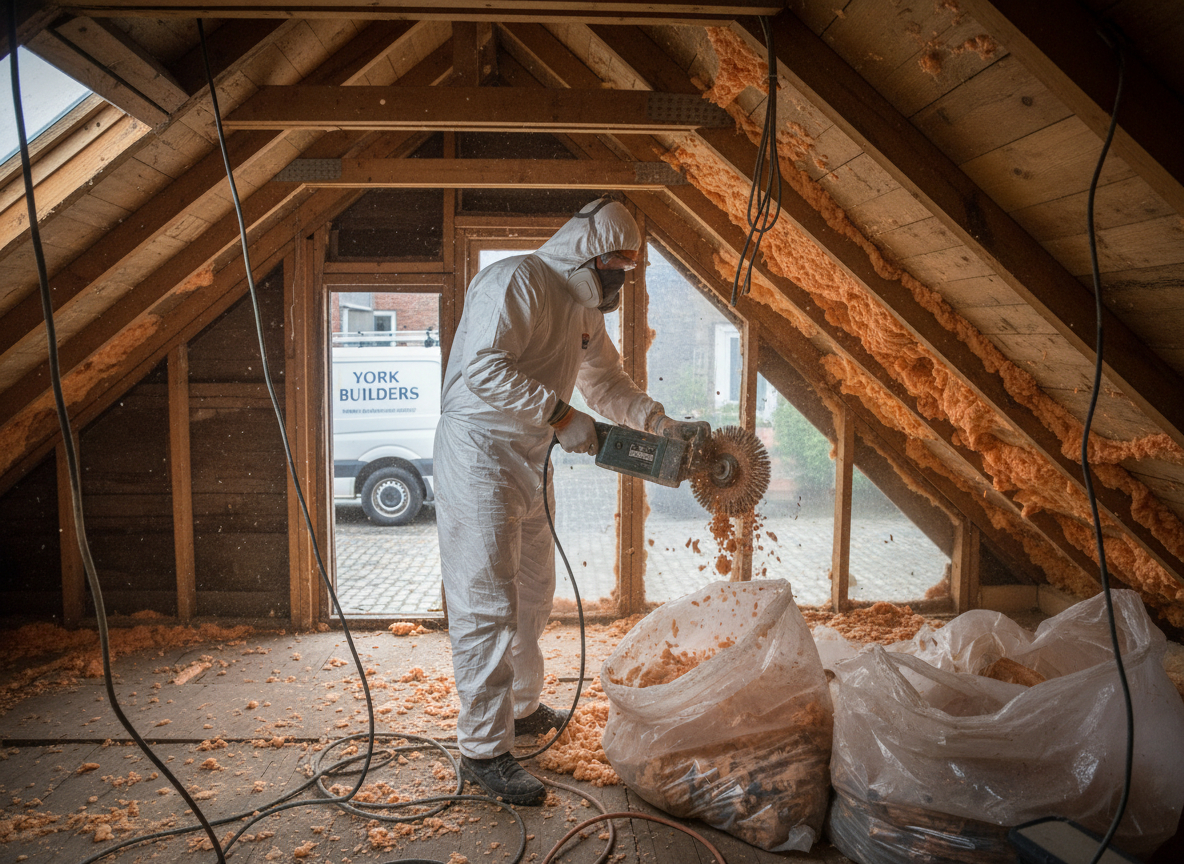
York properties, particularly Victorian terraces in areas like Clifton and Acomb, often received spray foam insulation in lofts and roof voids during earlier energy upgrades. Over time the region's frequent rainfall and high humidity allow moisture to become trapped against original timber and slate, leading to rot that only becomes visible once the foam is cut away. Removal crews must work carefully around fragile lath and plaster ceilings while managing dust and debris in confined roof spaces typical of these narrow terraced houses.
North Yorkshire weather patterns mean most removal jobs occur between spring and autumn when temperatures stay above the dew point, reducing condensation risks during the work. Winter calls still come in from properties near the Ouse where sudden cold snaps cause ice to form behind failing foam, accelerating timber damage. Crews at Purecore Spray Foam Insulate based at 48 Coney Street respond 24/7 and carry equipment sized for the tight access routes found in the historic city centre.
Local building practices in York frequently left foam applied directly over original felt or between rafters without ventilation channels. Once removed, the exposed roof structure often requires new breathable membranes and upgraded vents to meet current Yorkshire building standards. Homeowners in surrounding villages such as Bishopthorpe and Dunnington report similar issues where agricultural conversions received foam that later failed due to fluctuating barn temperatures and poor original roof pitch.
Disposal of removed foam must follow North Yorkshire waste rules, with material segregated on site before transport. Older properties around the city walls commonly contain multiple foam layers from successive installations, each requiring different cutting techniques to avoid damaging hidden wiring or pipework.
Technician insight
In York, the thing that catches most people out with Spray Foam Removal near me is how often foam was sprayed straight onto the original felt in Victorian terraces around the city walls; the wet North Yorkshire climate then traps moisture against the rafters for years until removal reveals widespread rot that needs fixing before any new insulation goes back in.
Clifton Terrace Loft
Homeowner in Clifton noticed ceiling stains after heavy autumn rain. Inspection found multiple layers of foam trapping moisture against 19th-century rafters. We removed the foam in sections, exposed the damp timber, and fitted new breathable membrane with added ridge vents. Property now has clear airflow and no recurring damp.
How it works
- 1
Site Assessment
Inspect roof voids, check for damp staining on timbers, and map access points in York properties.
- 2
Protection and Containment
Seal living areas below and set up dust extraction suited to narrow terrace layouts.
- 3
Foam Removal
Cut and extract foam in sections, monitoring for hidden moisture or rot as work progresses.
- 4
Cleanup and Ventilation Check
Remove debris, assess rafter condition, and advise on required roof ventilation upgrades.
Pricing
Cost depends on roof size, number of foam layers, and access difficulty in older York buildings.