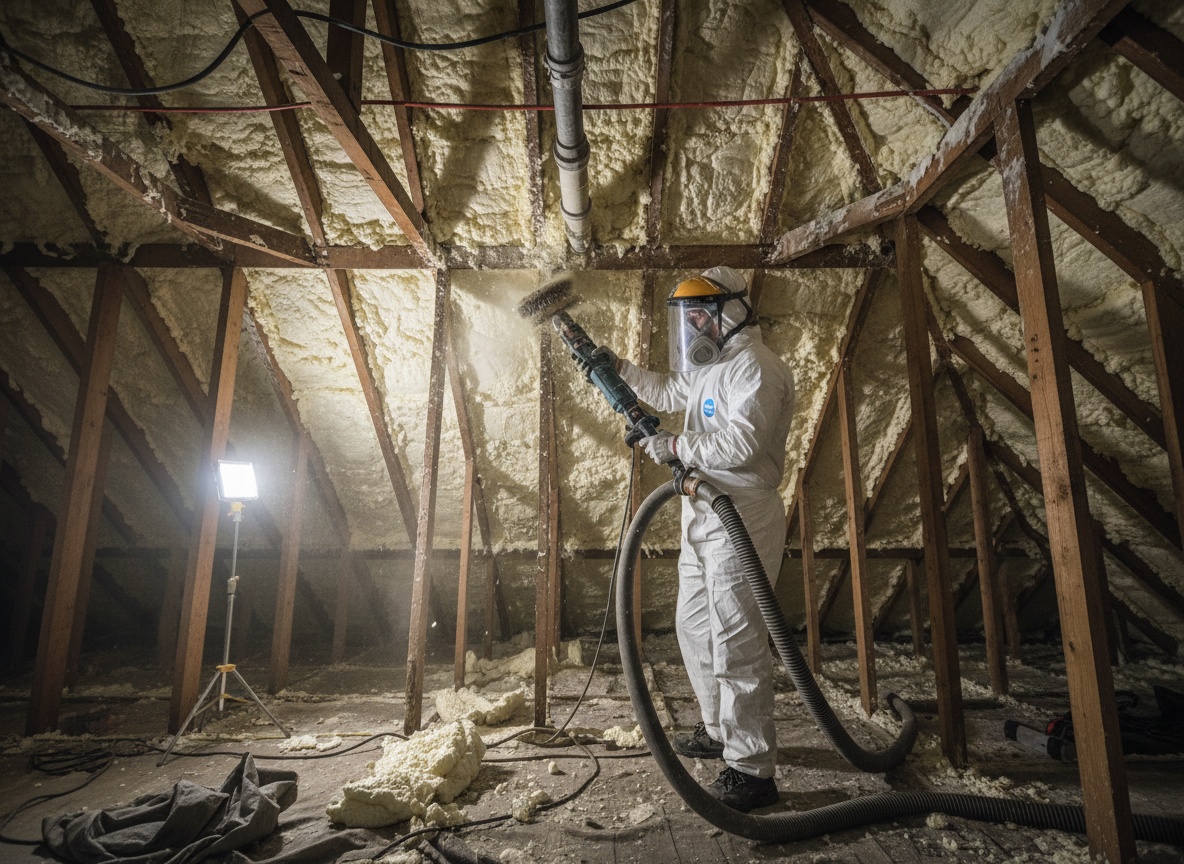
York's older housing stock, particularly Victorian terraces in neighbourhoods such as Clifton and The Groves, often contains spray foam that was installed before current building regulations on ventilation and moisture control. Closed-cell foam in these properties can trap damp against timber joists and lath-and-plaster ceilings, leading to rot that only becomes visible once the material is cut out. Removal crews must work section by section, using dust extraction and temporary supports to avoid disturbing original roof structures that are common in the city centre.
Night and weekend call-outs are routine because many homeowners first notice the problem during winter when condensation increases. In North Yorkshire's variable weather, sudden rain can enter through any temporary roof openings created during extraction, so tarpaulins and rapid re-sealing form part of every job. Disposal routes must follow Environment Agency rules for polyurethane waste, which adds handling time compared with simpler insulation types.
Edge cases include foam that has been applied over electrical cables or around chimney breasts in listed buildings. These require hand tools rather than powered cutters to prevent damage that could trigger planning issues. Homeowners are advised to keep records of any previous insulation work, as the presence of urea-formaldehyde foam from earlier decades changes the containment method used on site.
Technician insight
In York, the thing that catches most people out with 24/7 Spray Foam Removal is how often closed-cell foam in 19th-century terraces has been sprayed right up against original timber lintels, so any rushed cutting risks splitting joists that are already carrying extra load from later roof alterations.
Overnight Loft Clearance in Central York
A homeowner in a Victorian terrace near the city walls reported persistent damp smells. Inspection showed closed-cell foam blocking eaves ventilation and trapping moisture against rafters. We removed the material overnight using sectional cuts and hand tools around the original timbers, then opened the vents fully before leaving site.
How it works
- 1
Initial Site Assessment
Technicians inspect the property to identify foam type, depth, and any hidden damage to timbers or electrics before work begins.
- 2
Containment Setup
Dust barriers and extraction units are installed to protect living areas, especially important in terraced houses with shared walls.
- 3
Foam Extraction
Material is cut and removed in controlled sections, with hand tools used near historic features to limit disturbance.
- 4
Clearance and Disposal
All waste is bagged on site and taken to licensed facilities; the area is vacuumed and ventilated before handover.
Pricing
Cost depends on property age, foam depth and access restrictions typical of York terraces.