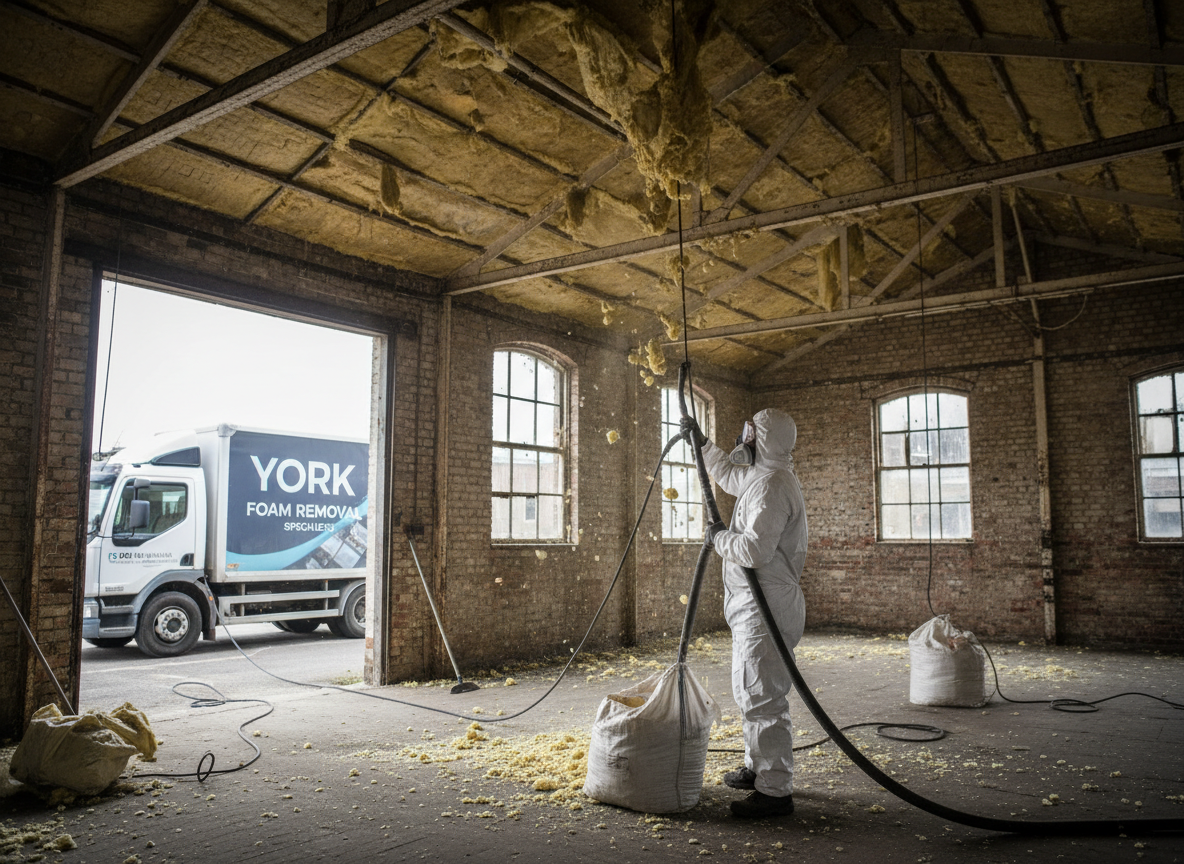
Commercial properties in York often feature older brick and timber construction typical of the city centre and nearby districts. Removing spray foam from these structures requires careful separation of the material from load-bearing elements without damaging original masonry or joists. Moisture trapped behind foam layers becomes a common issue during the region's damp winters, so extraction must include full inspection of wall cavities and roof spaces to prevent hidden decay.
Work on larger sites such as offices or retail units near the River Ouse demands extra containment because foam dust can migrate through shared ventilation systems. Technicians use negative air machines and sealed walkways to keep the rest of the building operational. Disposal follows Environment Agency guidelines for construction waste, with all removed material bagged and logged before leaving site.
Edge cases include foam applied over existing insulation in converted warehouses along the city outskirts. These jobs need staged removal to avoid overloading floors with debris weight. Post-extraction checks focus on restoring original airflow paths, especially in buildings where modern foam had blocked traditional vents.
Technician insight
In York, the thing that catches most people out with Commercial Spray Foam Removal is how many city-centre commercial buildings from the Victorian era have narrow wall cavities and shared party walls that let moisture migrate sideways once foam is disturbed during our frequent wet spells.
Retail Unit Near York Minster
Problem: Failing spray foam in a ground-floor shop causing musty odours. What we found: Foam had bridged original air bricks and trapped water against stone walls. What we did: Sectional removal with temporary propping and full cavity clearance. Outcome: Airflow restored and no further damp reports after six months.
How it works
- 1
Initial Survey
Technicians inspect the commercial property to map foam locations, assess building age and structure, and identify any moisture or access constraints.
- 2
Site Preparation
Protective barriers and dust extraction equipment are set up to isolate the work area from occupied spaces.
- 3
Foam Extraction
Material is cut and removed in sections using specialist tools suited to the substrate, with constant monitoring for structural impact.
- 4
Waste Removal and Verification
All debris is cleared, surfaces are cleaned, and a final walkthrough confirms the space is ready for follow-on trades.
Pricing
Costs depend on building size, foam thickness and access difficulty; an on-site visit provides the accurate scope.