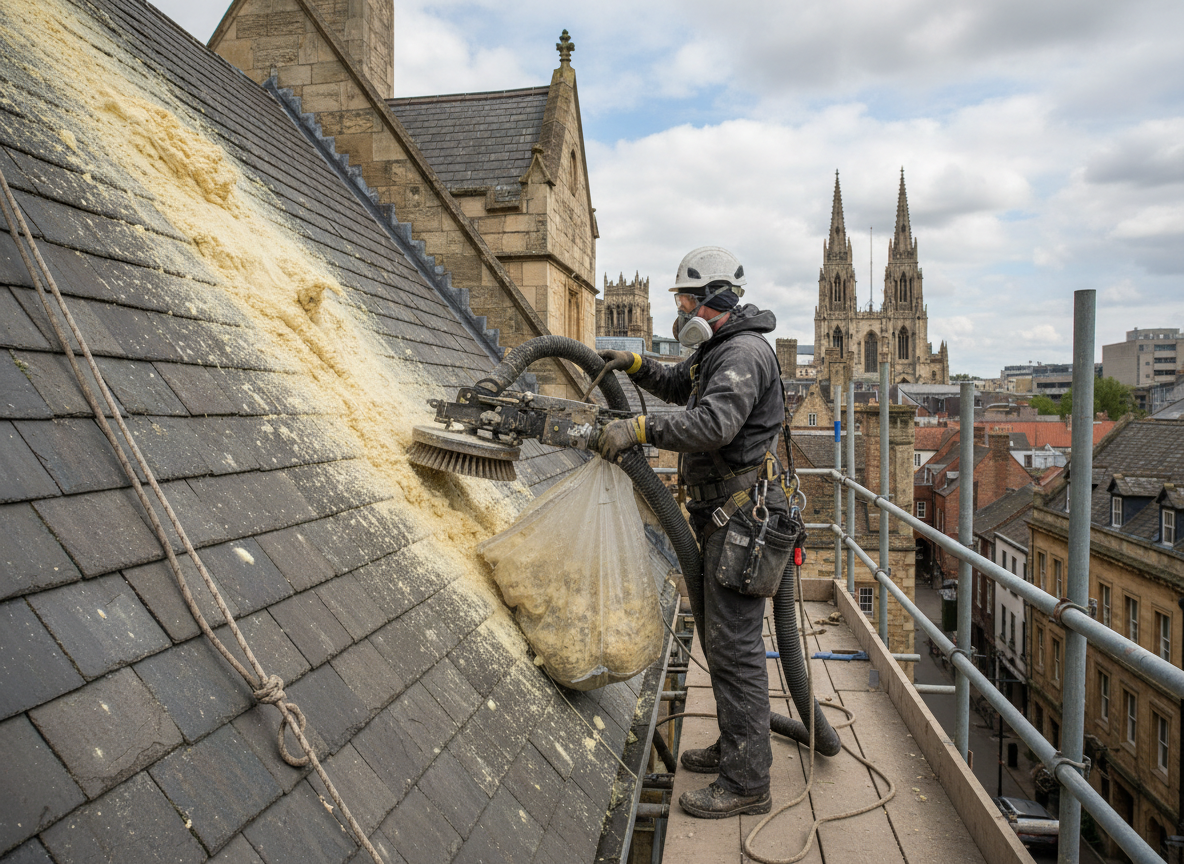
Roof spray foam removal in York often involves closed-cell polyurethane applied over slate or clay tile on Victorian terraces and Edwardian semis common in neighborhoods like Clifton and Acomb. Over time this foam traps moisture against timber battens and felt, accelerating rot especially during the region's frequent winter rainfall and freeze-thaw cycles. Technicians must cut and peel the foam in controlled sections while protecting historic roof structures that lack modern ventilation gaps.
Edge cases include properties near the River Ouse where high ground moisture levels have already softened rafters before removal begins. Attempting DIY scraping risks tearing underlay or dislodging ridge tiles, leading to leaks that become apparent only after heavy autumn downpours. Professional crews use negative-pressure extraction and hand tools to avoid disturbing lead flashings around chimneys typical in York roofs.
Local building practices mean many roofs still carry original torch-on felt beneath the foam; this layer must be inspected and often replaced after foam removal to meet current moisture-control standards. Crews also check for asbestos-containing bitumen in older York properties before any cutting work starts. Proper disposal of removed foam follows North Yorkshire waste regulations to prevent landfill contamination.
Technician insight
In York, the thing that catches most people out with roof spray foam removal is the hidden layers of original felt and bitumen under the foam on pre-1930s terraces around the city walls; pulling too aggressively tears the underlay and lets rain straight onto rafters during our typical wet winters.
Clifton Terrace Roof
Homeowner noticed ceiling staining after winter storms. Inspection revealed closed-cell foam trapping moisture against 1920s felt on a slate roof. Crew removed foam in sections, replaced damaged underlay, and restored ventilation without disturbing original tiles.
How it works
- 1
Site Assessment
Inspect roof access, foam depth, and underlying structure from 48 Coney Street base before work begins.
- 2
Containment Setup
Install dust and debris barriers plus negative air machines to protect interior spaces during removal.
- 3
Foam Extraction
Cut and peel foam in sections using hand tools, preserving slate, tiles, and timber where possible.
- 4
Underlay Inspection and Cleanup
Check felt and battens, remove residue, and clear all waste from the York property.
Pricing
Cost depends on roof size, foam thickness, and access difficulty; upfront quotes provided after inspection.