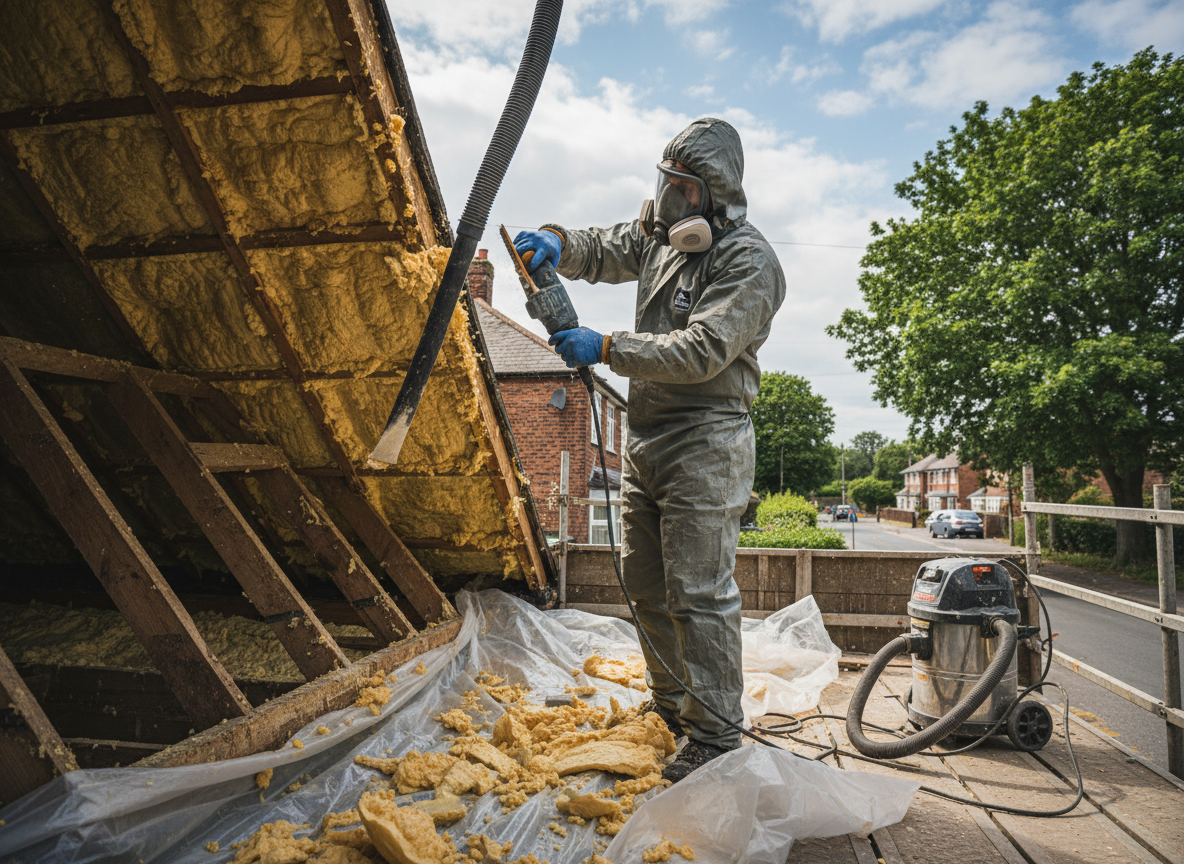
York's Victorian and Edwardian terraces often received spray foam in lofts and wall cavities during energy upgrades, but the region's frequent rainfall and high humidity allow moisture to become trapped against timber joists and brickwork. Over time this leads to rot, reduced ventilation, and hidden mould growth that only becomes visible once ceilings are opened. Removal requires careful cutting and extraction to avoid disturbing original lath and plaster or damaging slate roofs common in the city centre and suburbs such as Acomb and Heworth.
North Yorkshire winters bring prolonged cold spells that can freeze residual moisture inside foam cells, making the material brittle and more likely to fragment during removal. Crews working around the Ouse and Foss must also manage limited access through narrow attic hatches and shared chimney stacks. Proper containment sheeting and negative-air machines prevent foam particles from settling into living spaces below, a step that becomes essential in tightly packed streets where neighbours' properties sit only metres away.
After extraction, cavities are inspected for remaining adhesive and then ventilated to allow timber to dry before any new insulation is considered. In listed buildings around the Minster or within the city walls, additional care is taken not to alter historic fabric. Homeowners in surrounding villages such as Haxby and Strensall face similar issues but with deeper roof voids and more agricultural dust, which changes how debris is collected and disposed of.
Technician insight
In York, the thing that catches most people out with spray foam insulation removal is how quickly moisture builds up behind the foam in unventilated Victorian lofts along the river. Once you open the space the joists are often already soft, and the damp air from the Ouse valley slows drying more than people expect.
Loft Foam Removal in a Heworth Terrace
Homeowner noticed ceiling staining after heavy winter rain. Inspection found closed-cell foam trapping condensation against rafters in a 1900s terrace. We removed the foam in sections, dried the timber over several days, and left the loft ventilated. No further staining appeared the following season.
How it works
- 1
Initial Assessment
Inspect loft or cavity access points, check for moisture damage, and map foam depth across the York property.
- 2
Containment Setup
Install sheeting and negative air to keep particles from entering living areas in terraced homes.
- 3
Foam Extraction
Cut and remove foam in sections while protecting joists, wiring, and original roof structures.
- 4
Cleanup and Drying
Vacuum residues, ventilate the space, and confirm timber moisture levels before handover.
Pricing
Cost depends on property age, foam thickness, and access difficulty in York terraces; upfront quotes provided after inspection.