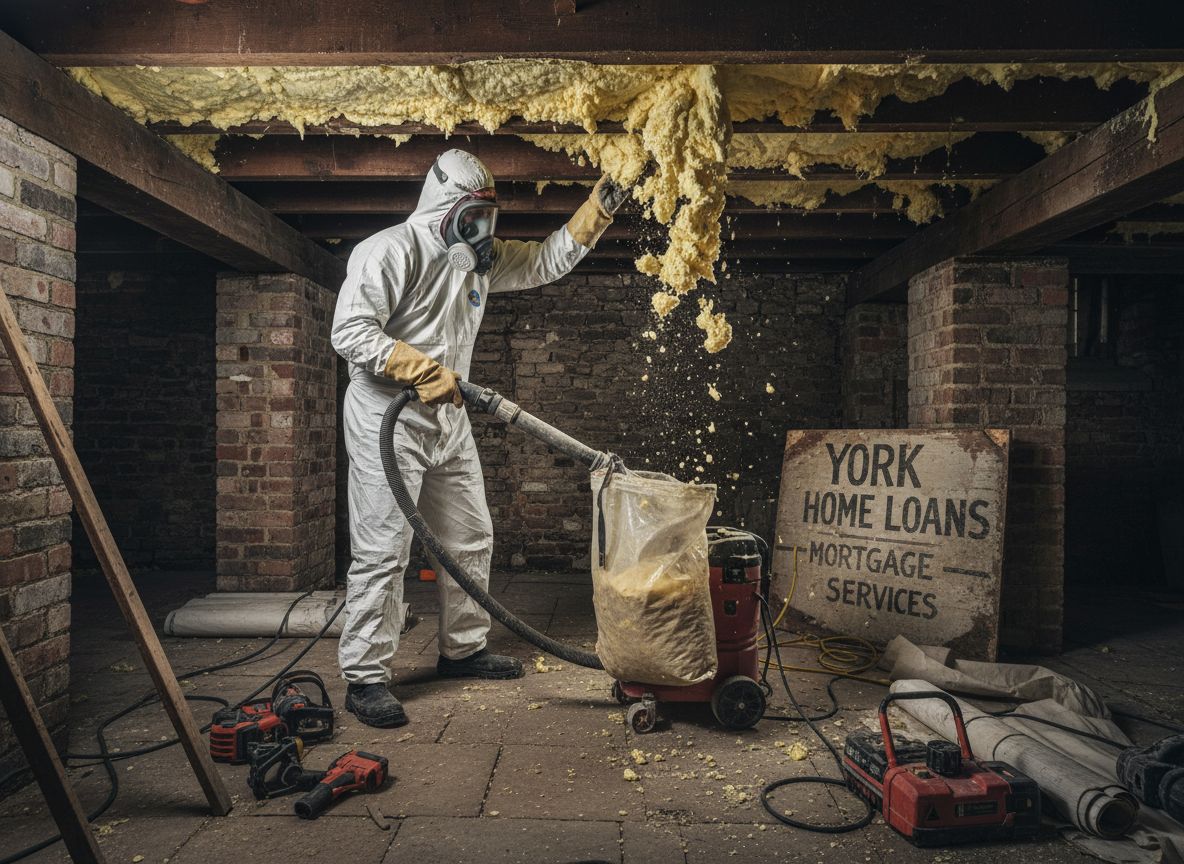
Mortgage lenders frequently reject properties in York where spray foam insulation remains in place because it can trap moisture within cavity walls of older brick and stone terraces common throughout the city centre and surrounding villages. Removal requires careful extraction without damaging original masonry or timber joists that have already absorbed years of damp from the region's frequent rainfall. Technicians must also restore ventilation paths that the foam originally blocked, preventing future condensation issues that could delay a sale or re-mortgage.
Work on these jobs often starts with a lender-mandated inspection that identifies the exact foam type and its location, whether in lofts, walls or under floors of Victorian and Edwardian stock found along streets near the River Ouse. Extraction methods differ depending on access constraints in narrow terraced layouts typical of York, where scaffolding or internal disruption must be minimised. Post-removal checks confirm no residue remains that could affect timber treatment or re-insulation options the lender will accept.
Homeowners in York and nearby settlements such as Haxby or Bishopthorpe regularly face delays when surveyors flag spray foam installed in the 1990s or early 2000s. The process includes documenting every stage for the lender's records, from initial exposure to final clearance and ventilation reinstatement. This documentation is essential because many lenders require proof that the property now meets their current criteria before releasing funds.
Technician insight
In York, the thing that catches most people out with mortgage lender spray foam removal is the older terraces where foam was blown into unvented cavities decades ago, and now lenders flag hidden timber decay that only appears once the foam is stripped out.
Lender Hold on City Centre Terrace
A York homeowner could not proceed with a re-mortgage due to spray foam noted in the survey. Inspection revealed foam blocking airflow in the cavity walls of a 19th-century terrace. We removed the foam, restored ventilation and supplied the required documentation. The lender released the funds once clearance was confirmed.
How it works
- 1
Initial Assessment
Survey the property to locate all spray foam and confirm lender requirements.
- 2
Safe Extraction
Remove foam using methods suited to the building's age and construction without damaging original materials.
- 3
Ventilation Restoration
Reopen cavities and roof spaces to restore airflow and reduce moisture risk.
- 4
Documentation Handover
Provide detailed records and photos for the mortgage lender's approval process.
Pricing
Upfront quotes provided after site assessment; costs depend on property age, foam extent and access.