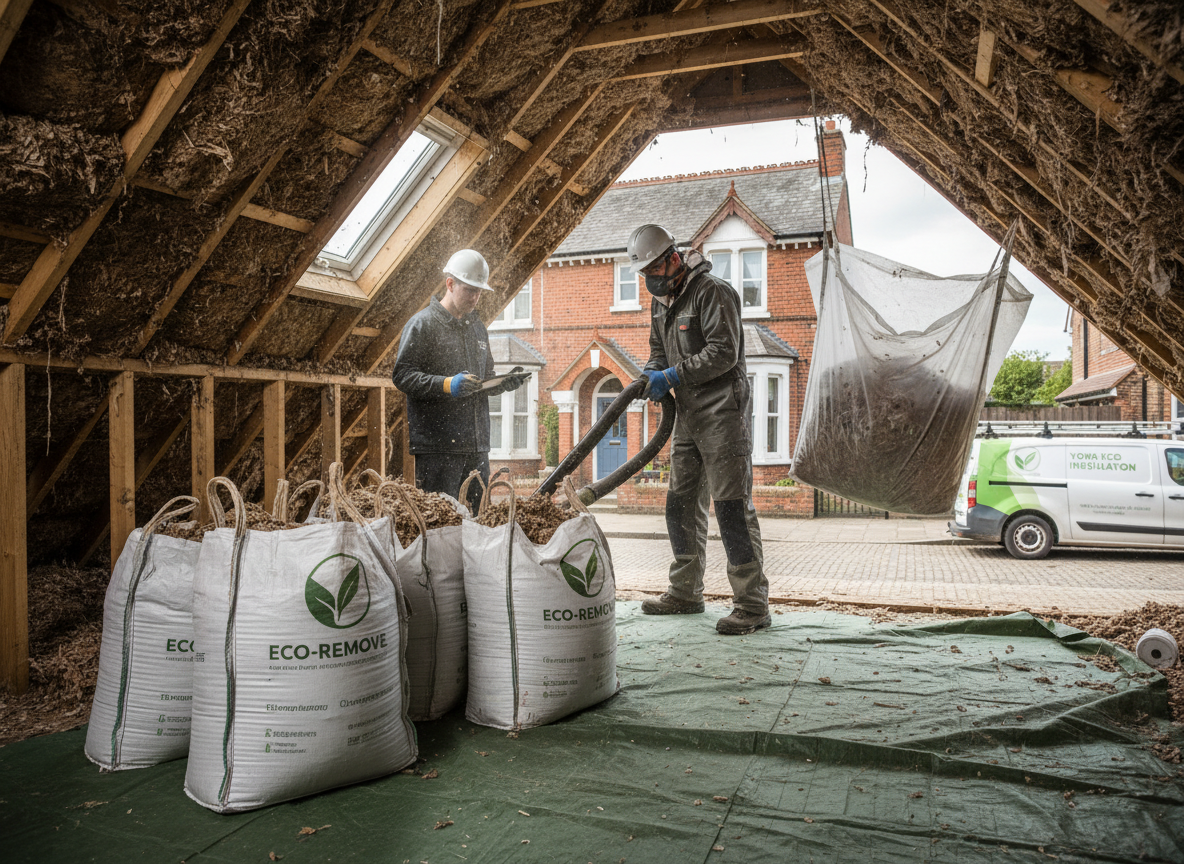
York’s housing stock ranges from Georgian townhouses and Victorian terraces to post-war semis, many with solid walls or timber frames that were never designed for modern closed-cell foam. When foam is injected it often bonds to lath and plaster or stone, trapping moisture that the region’s frequent rain and high water table then push sideways into joists. Environmentally friendly removal starts with testing for off-gassing and moisture content, then uses low-VOC solvents and mechanical scraping that leaves the original substrate intact rather than tearing it out.
Edge cases appear regularly in the city centre where properties sit on the flood plain of the Ouse. Foam that has been in place for ten or fifteen years has frequently absorbed groundwater salts; these must be neutralised before any new insulation goes back in. We also see foam that has crept into chimney flues or behind original panelling in The Groves and Clifton, requiring endoscopic inspection and targeted extraction so the Grade II listing is not compromised.
Regulation in the York area requires that removed foam is segregated from general waste and taken to licensed facilities rather than landfill. Our process documents every load so householders have a clear chain of custody. Homeowners often underestimate how much dust and residue remains in floor voids after removal; we finish with HEPA vacuuming and, where needed, a borate treatment to deter any remaining mould spores that the foam had masked.
Seasonal Considerations
York winters bring prolonged cold snaps that make foam brittle and easier to shear, while summer humidity slows solvent evaporation. Scheduling removal between October and March often reduces disruption because heating systems are already in use and any temporary ventilation can be managed without losing warmth.
Technician insight
In York, the thing that catches most people out with environmentally friendly insulation removal is how often foam has wicked moisture from the clay subsoil into Victorian joist ends; once you open the floor you find the rot the foam had hidden, and that changes the whole job.
Foam Removal in a Clifton Terrace
Homeowners noticed musty smells after heavy autumn rain. Inspection showed closed-cell foam had bridged a damp-proof course in the rear addition. We extracted the foam in sections, treated the salts, and left the joists exposed for drying; the property could then be re-insulated with breathable material without further timber loss.
How it works
- 1
Site Assessment
We inspect the property, identify foam type and depth, check for hidden moisture, and map access points in York homes.
- 2
Containment Setup
Dust barriers and negative-air machines are installed to protect living spaces and original features.
- 3
Foam Extraction
Low-VOC agents soften the foam followed by careful mechanical removal that preserves underlying timber or plaster.
- 4
Void Cleaning & Disposal
All residue is HEPA-vacuumed and the material is taken to a licensed recycling facility with full paperwork.
- 5
Final Inspection
Moisture readings and visual checks confirm the space is ready for any follow-on work.
Pricing
Cost depends on access difficulty, foam thickness, and whether additional cleaning or temporary heating is required.